Loosing a tooth in the back of your mouth might not seem like a big deal. No one can see it when you smile, so why bother fixing it?
Replacement for a missing back tooth may help prevent nearby teeth from shifting, maintain a more balanced bite, and address changes that can occur in the jawbone over time.
Even though a missing back tooth is not visible, it still plays a big role in how you chew and how your other teeth stay in place.
Your back teeth do a lot of the hard work when you eat, so losing one can throw things off more than you might expect.
This article looks at what really happens when you skip replacing a missing molar, how it can affect your comfort and oral health, and the replacement options you can talk about with your dentist.
You will also get answers to common questions so you can decide what is best for your smile.
Key Takeaways
- A gap from a missing tooth can cause nearby teeth to shift and your bite to change.
- Leaving the space empty for too long may lead to bone loss and future dental problems.
- Talking with your dentist about the right treatment and timing can help protect your long-term oral health.
Why a Back Tooth Matters Even If It Is Not Visible
A back tooth does not show when you smile, but it still does real work every time you eat. Losing one can affect how you chew, how your bite feels, and how much stress your other teeth carry.

The Chewing Role of Molars and Premolars
Your molars and premolars are built for chewing. They have flat, wide surfaces that crush and grind food before you swallow it.
Front teeth cut and tear, but they are not built to grind. That job belongs to your back teeth.
When you lose one, your chewing function can drop. You may find yourself chewing longer, favoring one side, or avoiding foods that need more effort, like raw vegetables or meat.
This is not just a minor inconvenience. Losing a back tooth can make certain foods more difficult to chew and may cause you to rely more heavily on the opposite side of your mouth.
How Back Teeth Share Bite Force
Every time you bite down, your back teeth absorb most of the pressure. They are built for this, with strong roots and broad surfaces made for heavy use.
When a back tooth is missing, that bite force does not disappear. It shifts to nearby teeth instead.
This can throw off your bite stability over time. Your bite may start to feel uneven, or you may notice one side of your mouth doing more work than the other.
Some people also feel changes in their jaw, like tightness or soreness, since the muscles have to adjust to the new pattern of force.
Protecting Front Teeth From Excess Wear
Your front teeth were not designed to handle heavy chewing pressure. They are thinner and made mainly for biting, not grinding.
Changes in how you chew after losing a back tooth can redistribute biting forces to other teeth, potentially contributing to uneven wear over time.
This added strain can also make you more prone to tooth sensitivity or discomfort.
If left alone for years, replacing a missing back tooth becomes more important, since the damage to front teeth can be harder to reverse than the original gap.
What Can Happen When the Space Is Left Open
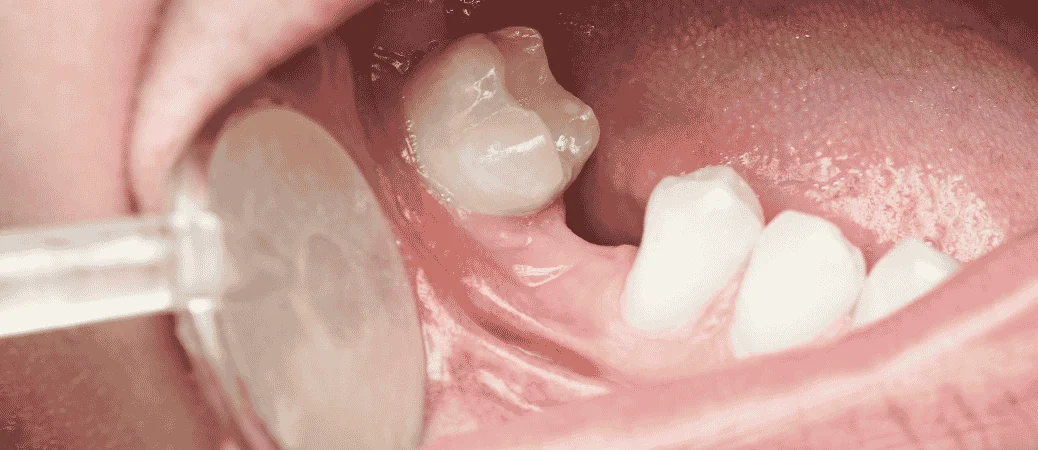
Leaving a gap in the back of your mouth can set off a chain of small changes over time. Your surrounding teeth, your bite, and even your jawbone can all be affected.
Shifting and Tilting of Surrounding Teeth
Your teeth work as a team to keep each other in place. When one tooth is missing, the teeth next to it no longer have that support.
Over time, these surrounding teeth may lean or tilt toward the empty space. This is often called tooth shifting, and it can happen slowly enough that you don’t notice it right away.
As teeth shift, gaps can form or food may start getting stuck between them. This can make cleaning harder and raise your risk of decay or gum problems in that area.
Movement of the Opposing Tooth
It’s not just the teeth beside the gap that can move. The tooth across from the missing one, on the opposite jaw, can also shift.
Without an opposing tooth to bite against, the tooth across from the gap may gradually move farther out of its socket toward the empty space. This is known as super-eruption.
This movement can create an uneven surface in your mouth. It may also make it harder to fit a replacement tooth later, since there may not be enough room left.
Bite Changes and Uneven Chewing
Your bite is how your upper and lower teeth fit together when you chew. When a tooth is missing, this alignment can slowly change.
You may start chewing more on one side without realizing it. This can lead to bite misalignment, where your teeth no longer meet evenly.
Over months or years, this can cause:
- Uneven wear on certain teeth
- Jaw discomfort or tension
- Less efficient chewing
- A bite that feels “off” compared to before
These bite problems don’t always cause pain right away, but they can build up gradually and affect your comfort when eating.
Bone Changes After Tooth Loss
Your jawbone needs regular stimulation from tooth roots to stay strong. When a tooth is missing, that part of the jawbone no longer gets that signal.
This can lead to bone loss in the area, sometimes called jawbone loss. Over time, jawbone density can decrease, and the bone may shrink in size or change shape.
This process isn’t the same for everyone. Some people lose very little bone, while others lose more, which can eventually affect facial structure and make future tooth replacement more complex.
How a Missing Back Tooth Can Affect Daily Comfort and Oral Health
A gap in your back teeth does more than change how you chew. It can lead to trapped food, extra wear on other teeth, and even jaw pain over time.
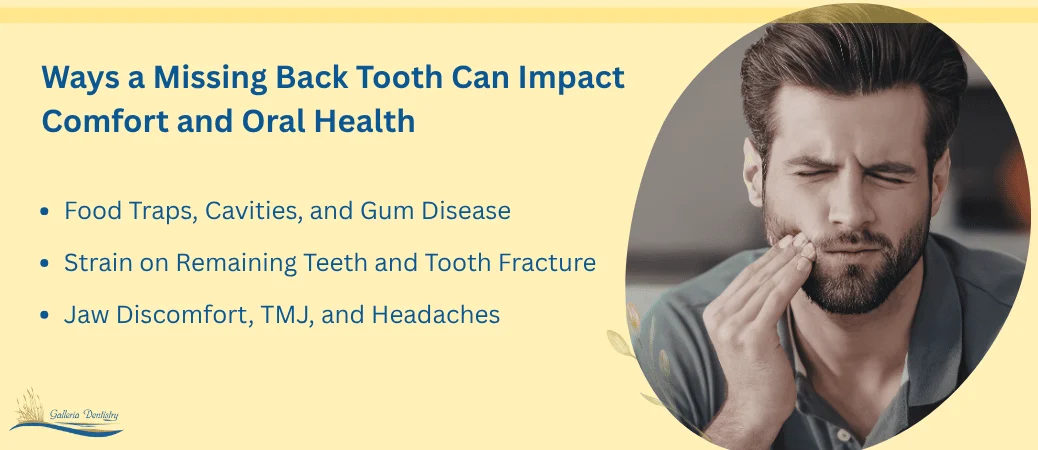
Food Traps, Cavities, and Gum Disease
When you lose a back tooth, food can get stuck in the empty space more easily. This makes it harder to clean that area, even with good oral hygiene habits.
Left-over food and plaque buildup raise your risk of cavities in nearby teeth. They also increase your chances of gum disease, which can turn into periodontal disease if it’s not treated.
Your gums may become swollen, red, or sore near the gap. Regular dental care and cleanings can help you catch these problems early before they spread to other teeth.
Strain on Remaining Teeth and Tooth Fracture
Your teeth work as a team when you chew. When one back tooth is gone, your other teeth pick up the extra work.
This added pressure can wear down your remaining teeth faster than normal. Over time, you may notice more sensitivity or even small cracks forming.
In some cases, this extra strain can lead to a full tooth fracture. This means one of your other teeth could crack or break under the added pressure.
You might also start favoring one side of your mouth when you eat. This habit can create uneven wear and make the problem worse over the months and years ahead.
Jaw Discomfort, TMJ, and Headaches
A missing back tooth can throw off your bite. When your teeth don’t meet the way they should, your jaw muscles have to work harder to compensate.
This extra effort can lead to jaw discomfort or ongoing jaw pain. Changes in your bite may contribute to jaw discomfort in some people.
If you experience persistent jaw pain, clicking, or headaches, your dentist can evaluate whether your bite or TMJ may be involved.
These bite problems often build up slowly, so you may not connect them to your missing tooth right away.
Tooth Replacement Options to Discuss With Your Dentist
If you decide to fill the gap, you have a few good choices. Your dentist can help you figure out which one fits your mouth, budget, and bite the best.
Dental Implants for Root-Level Support
A dental implant is a small titanium post that your implant dentist places right into your jawbone. It acts like a new tooth root. Once it heals, a crown gets attached on top.
Because the implant is supported independently in the jawbone, it can replace a missing tooth without relying on neighboring teeth for support.
Implant placement requires adequate jawbone volume and quality for support. Your dentist will check your jawbone density with an x-ray before moving forward.
If your bone is too thin in that back area, you might need a bone graft first. This adds time and cost, but it can make the implant possible.
When a Dental Bridge May Be Appropriate
A dental bridge fills the gap using the teeth on either side of it for support. Your dentist shapes those two teeth and places crowns on them. A fake tooth sits in between, held up by the crowns.
This option works well if the teeth next to the gap are strong and healthy. It also feels solid, since it does not move around like a removable piece might.
The catch is that your dentist has to reshape healthy teeth to make this work. Once that happens, those teeth will always need crowns.
A dental bridge may be considered for patients who want a fixed replacement option without implant surgery.
Partial Dentures and Temporary Solutions
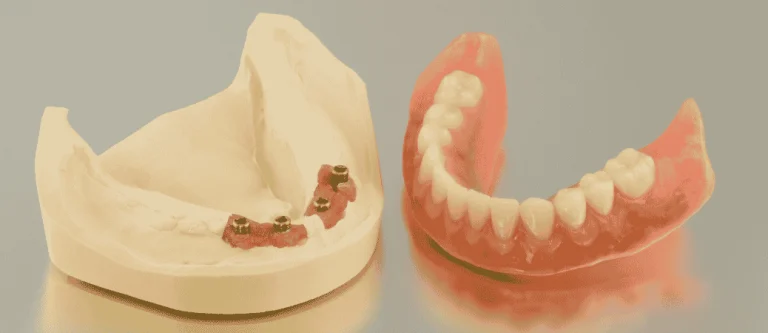
A partial denture is a removable piece that fills the gap. It clips onto the teeth around it and comes out for cleaning.
A partial denture is a removable restoration that can replace one or more missing teeth. It may be considered when a removable treatment is preferred or when implant or bridge treatment is not appropriate.
The downside is comfort. Some people feel it move slightly while chewing, and it needs to be taken out at night. It also does not stop bone loss in the jaw the way an implant does.
Still, it is a reasonable short-term fix while you plan your next move.
When Monitoring May Be Considered
Sometimes your dentist may suggest waiting and watching instead of jumping into treatment right away. This might come up if your other teeth are healthy and stable, and the gap is not causing pain or shifting.
Your dentist will likely want to check the area at each visit. They will look for signs like teeth drifting into the space or your bite changing.
If those signs show up, it is usually a sign to move forward with one of the tooth replacement options above. Waiting is not a bad plan, but it works best when you are keeping an eye on things with regular dental checkups.
Choosing the Right Time and Treatment Plan
The right time to act and the right treatment both depend on a few key factors, including your bone health, budget, and how the gap affects your daily life.
Talking with a dentist early on can help you avoid bigger problems down the road.
Why an Early Dental Evaluation Help
Seeing a dentist soon after losing a tooth can help you understand your replacement options before surrounding teeth or bone begin to change.
At Galleria Dentistry, Dr. Gery Benza can evaluate the gap, your bite, and your jawbone to determine which tooth replacement option may fit your needs.
An early check-up lets your dentist look at your jawbone, gums, and bite before things shift. This helps them catch small issues before they turn into bigger, costlier ones.
Your dentist can also explain how waiting might affect your oral health over time. Even if the tooth is in the back and hard to see, that doesn’t mean it’s safe to ignore.
Getting information early gives you the power to make a smart choice, not a rushed one.
Factors That Determine the Best Option
There’s no single “best” treatment for everyone. Your dentist will look at a mix of personal and clinical details to help you decide.
Common factors include:
- Bone density: Enough bone is needed for implant placement to succeed
- Overall oral hygiene: Healthy gums support most treatment types
- Budget: Treatment costs vary based on the type of restoration and any additional procedures required.
- Bite alignment: Some options help keep your bite balanced better than others
- Chewing function: Your dentist will consider how much you rely on that tooth for eating
- Time and recovery: Some treatments need more healing time than others
Your dentist will walk you through these details so you understand why one option might fit your needs better than another.
Caring for Your Restored Smile
Once you’ve chosen a treatment, taking care of it is just as important as picking it. Good daily habits help protect your investment and keep your mouth healthy.
Here’s what to keep in mind:
- Brush and floss around the area gently but thoroughly
- Visit your dentist for regular dental care checkups
- Avoid chewing hard foods directly on a new implant or bridge right away
- Watch for any signs of gum irritation or looseness
Sticking to these habits can help prevent future bone loss and keep your bite steady. It also helps protect your confidence, since a healthy, well-maintained smile tends to feel and look better over time.
Frequently Asked Questions
Here are quick answers to common questions about missing back teeth, including the risks of waiting, your chewing ability, and what your replacement options look like.
Do I really need to replace a missing back tooth?
Yes, it’s a good idea. Even though back teeth aren’t visible when you smile, they do a lot of work.
Your molars help you chew food and keep your bite balanced. If you skip replacing one, you could run into problems with bone loss and shifting teeth over time.
What can happen if I leave a missing molar untreated?
A few things can happen, and none of them are great. Your jawbone in that spot can start to shrink because it’s no longer getting used when you chew.
Nearby teeth may also start to shift into the open space. This can throw off your bite and lead to more dental problems down the road.
Will a missing back tooth affect how I chew or eat?
It can, especially if the tooth was doing a lot of the chewing work. Your other teeth have to pick up the slack, which can wear them down faster.
You might also notice it’s harder to chew certain foods evenly. Over time, this uneven pressure can strain your jaw joint too.
Can the surrounding teeth shift after losing one back tooth?
Yes, this is actually one of the most common issues. Teeth naturally lean toward open spaces when there’s nothing there to hold them in place.
This shifting can change your bite alignment and make your teeth harder to clean properly. Crooked or tilted teeth also trap more food and plaque, which raises your risk of cavities and gum disease.
What are the best replacement options for a missing back tooth?
You have a few solid choices depending on your needs and budget. A single-tooth implant is often the top pick because it replaces the tooth root too, which helps keep your jawbone healthy.
A dental bridge is another option if you have healthy teeth next to the gap. Partial dentures work well too, especially if you’re missing more than one tooth in that area.
Your dentist can help you figure out which option fits your mouth and lifestyle best.
How long can I wait before replacing a missing tooth?
There’s no strict deadline, but waiting too long can make things harder to fix. The sooner you act, the less time your jawbone and nearby teeth have to shift out of place.
Some people wait months or even years without major issues. Others notice changes within weeks. It really depends on your mouth, so it’s worth talking to your dentist sooner rather than later.