

Your smile depends on good dental care habits at home and regular visits to your dentist. Many adults wonder if they really need to go to the dentist twice a year or if they can skip appointments to save time and money.
The truth is that keeping up with dental cleanings protects more than just your teeth.
Most adults should get dental cleanings every six months, though some people may need to visit more often based on their oral health needs.
Regular teeth cleaning helps prevent cavities, gum disease, and other dental problems before they become serious. Your Naples dentist can tell you the right schedule for your specific situation.
Getting your teeth cleaned regularly does more than keep your smile bright. Professional cleanings remove buildup that your toothbrush cannot reach at home.
This helps protect your gums and teeth from disease while giving your dentist a chance to catch small problems early.
Key Takeaways
- Most adults benefit from dental cleanings twice per year to maintain good oral health
- Professional cleanings remove plaque and tartar that regular brushing and flossing cannot eliminate
- Your dentist may recommend more frequent visits if you have gum disease or other dental concerns
Table of Content
- Recommended Dental Cleaning Frequency for Adults
- What Happens During a Professional Dental Cleaning
- Understanding the Different Types of Dental Cleanings
- The Connection Between Dental Cleanings and Gum Health
- Maintaining Oral Health Between Dental Visits
- Frequently Asked Questions
Recommended Dental Cleaning Frequency for Adults
Most adults benefit from professional teeth cleaning every six months, though your specific needs may require more or fewer visits based on your oral health status and risk factors.
Standard Six-Month Rule
The American Dental Association recommends dental cleanings at least twice per year for most adults. This means you should schedule a professional cleaning every six months as part of your preventive dentistry routine.
Regular teeth cleanings every six months help you:
- Remove tartar and plaque buildup that brushing can’t reach
- Detect cavities and gum disease early
- Keep your teeth and gums healthy between visits
Your Naples dentist performs a prophylaxis during these visits, which includes scaling to remove hardened plaque and whitening to brighten your smile. The entire appointment typically takes less than an hour.
While some experts have questioned whether the six-month standard applies to everyone, maintenance cleanings twice yearly remain the baseline recommendation for adults with good oral health.
Personalized Cleaning Schedules
Your ideal cleaning schedule depends on your individual oral health needs. Some adults need more frequent visits to their dentist if they face higher risks for dental problems.
You might need professional cleaning more than twice per year if you have diabetes, smoke tobacco, or have a family history of gum disease.
Your dentist will work with you to determine the right frequency based on your mouth’s specific condition. Some adults with excellent oral hygiene and low cavity risk may do well with annual cleanings instead of twice-yearly visits.
Cleaning Frequency for Special Populations
Adults with certain health conditions require adjusted cleaning schedules. If you have gum disease, your dentist may recommend regular dental cleanings every three to four months to prevent the condition from worsening.
Pregnant women often need extra cleanings due to hormonal changes that increase gum sensitivity.
Adults taking medications that cause dry mouth may also benefit from more frequent professional teeth cleaning sessions.
Those undergoing cancer treatment, managing autoimmune disorders, or wearing braces typically need customized maintenance cleaning plans that go beyond the standard twice-yearly schedule.
Schedule a dental cleaning in Naples, FL to remove stubborn buildup and protect your teeth and gums.

What Happens During a Professional Dental Cleaning
A professional dental cleaning involves several important steps that go beyond what you can achieve with brushing and flossing at home.
Your dental hygienist will remove buildup from your teeth, examine your mouth for potential problems, and apply protective treatments to keep your smile healthy.

Tartar and Plaque Removal
The first step of your professional dental cleaning involves a process called scaling. Your dental hygienist uses special tools to gently scrape away plaque and tartar from your tooth surfaces and along your gum line.
You might hear scraping sounds during this part of your appointment. Many hygienists use an ultrasonic scaler, which is a vibrating tool that breaks up tartar buildup. This tool uses water spray to wash away the debris as it works.
The scaling process shouldn’t hurt, though you might feel some pressure. If you have sensitive teeth or gums, let your hygienist know so they can adjust their technique.
Tartar removal is essential because this hardened buildup can’t be removed by brushing alone and can lead to gum disease if left untreated.
Dental Exam and Oral Cancer Screening
During your visit, your dentist will perform a thorough dental exam to check for cavities, gum disease, and other oral health issues. They’ll look at each tooth and examine your gums for signs of inflammation or bleeding.
Your dental examination also includes an oral cancer screening. Your dentist will check your lips, tongue, throat, and the inside of your cheeks for any unusual spots, lumps, or sores.
Early detection of oral cancer greatly improves treatment success.
Your dentist may also take X-rays to see problems hidden below the surface, such as cavities between teeth or issues with your jawbone.
These images help catch problems early before they become more serious and expensive to treat.
Tooth Polishing and Fluoride Treatments
After scaling, your hygienist polishes your teeth using a soft rubber cup and gritty toothpaste. This step removes any remaining plaque and surface stains, leaving you with a polished smile.
The polishing paste feels slightly rough but helps smooth your tooth surfaces.
Many dental cleanings include fluoride treatment as a final protective step. Your hygienist applies a fluoride gel or foam to your teeth for about a minute. This treatment strengthens your tooth enamel and helps prevent cavities until your next visit.
You might be asked not to eat or drink for 30 minutes after fluoride application to let it fully absorb into your teeth. Some practices also offer dental sealants for teeth with deep grooves that trap food and bacteria.
Understanding the Different Types of Dental Cleanings
Not all dental cleanings are the same. The type of cleaning you need depends on your current gum health and how much plaque and tartar have built up on your teeth.
Preventative Cleaning
A prophylaxis, or preventative dental cleaning, is the most common type you’ll get. This is what most people think of as a regular cleaning. Your dental hygienist removes plaque, tartar, and stains from above your gum line during this appointment.
This professional teeth cleaning is for people with healthy teeth and gums. You don’t have any signs of gum disease, and your gums don’t bleed when you brush or floss.
The hygienist uses special tools to scale your teeth and then polishes them with a soft rubber cup.
Most adults need this type of cleaning twice a year. However, if you wear braces or have a high cavity risk, you might need to schedule them more often.
Gingivitis Cleaning
A gingivitis cleaning goes a bit deeper than a regular cleaning. You need this if your gums show early signs of disease, like slight inflammation or occasional bleeding. Your gums might look red or puffy instead of their normal pink color.
This therapeutic cleaning removes buildup both above and slightly below your gum line. The goal is to stop gingivitis before it turns into more serious gum disease. Your hygienist will spend extra time cleaning around your gum pockets where bacteria collect.
The good news is that gingivitis can be reversed with proper care. After this cleaning, you’ll need to brush twice daily and floss regularly to keep your gums healthy.
Deep Cleaning and SRP
Scaling and root planing, or SRP, is what dentists call a deep cleaning for people with gum disease. This gum therapy reaches deep under your gums and around tooth roots.
Your dentist will numb your gums first because the cleaning goes below the gum line.
During scaling, your hygienist removes plaque and tartar from deep pockets around your teeth. Root planing smooths the tooth roots so your gums can reattach properly.
You might need two or more visits to complete the treatment, with each section of your mouth cleaned separately.
Your gums might feel sore for a few days after this procedure. But this deep cleaning helps stop bone loss and saves your teeth from severe periodontal disease.
Periodontal Maintenance Visits
Periodontal maintenance is an ongoing cleaning you need after completing SRP treatment. These visits aren’t the same as regular cleanings because they focus on preventing gum disease from coming back. You’ll need these appointments every three to four months instead of twice a year.
During each visit, your hygienist carefully cleans deep pockets around your teeth. They measure your gum pockets to make sure they’re not getting deeper.
These appointments also include removing any new plaque and tartar that has formed since your last visit.
Skipping these maintenance visits puts you at risk for gum disease returning. Your dentist will track your progress and adjust how often you need to come in based on how well your gums respond to treatment.
The Connection Between Dental Cleanings and Gum Health
Professional dental cleanings play a direct role in protecting your gums from infection and inflammation. Regular appointments help remove harmful buildup that your daily oral hygiene routine cannot fully address.
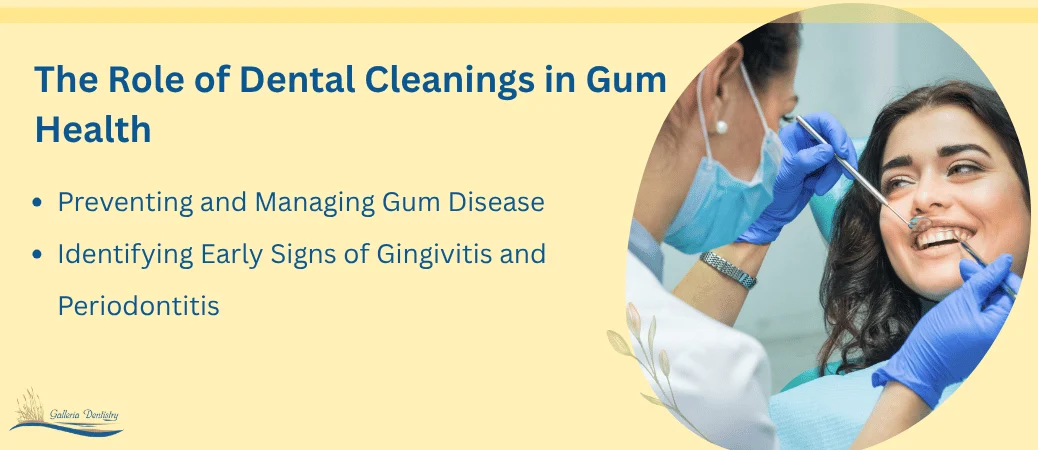
Preventing and Managing Gum Disease
Gum disease starts when plaque and tartar accumulate along your gumline. Professional teeth cleanings are vital for gum disease treatment and prevention because they remove these deposits before they cause serious damage.
When you brush and floss at home, you remove most plaque, but tartar requires special dental instruments to eliminate.
Without regular cleanings, bacteria in plaque release toxins that inflame your gums. This leads to gingivitis first, then can progress to periodontitis if left untreated.
Your dental hygienist can reach areas below the gumline that you cannot access on your own.
Periodontal disease refers to conditions that involve inflammation and infection of the tissues that support your teeth. Maintenance cleanings help manage these conditions and slow their progression.
Identifying Early Signs of Gingivitis and Periodontitis
Your dental team checks for warning signs during each cleaning appointment. They look for red, swollen, or bleeding gums that indicate gingivitis. They also measure pocket depths around your teeth to detect periodontitis.
Early-stage gingivitis often causes no pain, so you might not notice it yourself. Your hygienist can spot gum inflammation before it becomes serious. They check if your gums have pulled away from your teeth or if you have loose teeth.
When you’re dealing with gum disease or have an increased risk, your dentist may recommend more frequent visits. Catching these signs early prevents bone loss and tooth loss down the road.
Your cleaning appointments serve as both treatment and screening for gum health problems.
Maintaining Oral Health Between Dental Visits
Your daily habits and ability to spot warning signs play a major role in keeping your mouth healthy between professional cleanings.
Knowing what to do at home and when to call your dentist helps you avoid bigger problems down the road.
At-Home Oral Hygiene Habits

Your at-home oral hygiene routine forms the foundation of good dental care. You should brush your teeth twice a day for two minutes each time using fluoride toothpaste.
Make sure to brush all surfaces of your teeth, including the backs and chewing surfaces.
Flossing once daily removes plaque and food particles from between your teeth where your toothbrush can’t reach. Many dental problems start in these tight spaces, so brushing and flossing work together to protect your oral health.
You can also use mouthwash to kill bacteria and freshen your breath. Drinking plenty of water throughout the day helps wash away food particles and keeps your mouth moist.
Limiting sugary snacks and drinks reduces your risk of cavities between dental visits.
Recognizing When to Schedule an Extra Visit
Some signs mean you need to see your dentist before your next scheduled cleaning. You should call right away if you notice bleeding or swollen gums, persistent tooth pain, or sensitivity to hot or cold drinks.
Chipped, cracked, or shifting teeth need prompt attention from your dentist.
Bad breath that won’t go away even with good oral hygiene may signal an underlying problem. Loose teeth or changes in how your teeth fit together when you bite also require a dental visit.
If you experience any mouth sores that don’t heal within two weeks, contact your dentist. These warning signs often indicate issues that get worse without treatment, so don’t wait for your regular appointment to address them.
Frequently Asked Questions
Most adults need dental cleanings twice a year, but your schedule depends on your gum health, lifestyle habits, and medical conditions.
Some people require cleanings every three to four months to prevent gum disease and tooth loss.
How often should a healthy adult schedule a routine dental cleaning?
You should visit your dentist for a cleaning every six months if you have healthy gums and no major risk factors. This means two cleanings per year for most adults.
The six-month rule has been standard advice since the 1950s. It works well because plaque builds up on your teeth within hours of brushing and hardens into tartar in just 24 to 72 hours.
Even if you brush and floss daily, tartar forms in hard-to-reach areas. Your hygienist can remove this buildup before it causes gum inflammation or cavities.
What factors might mean I need cleanings more frequently than every six months?
People with gum disease should be seen every 3 or 4 months to prevent bacterial buildup in gum pockets.
If you smoke, you also need more frequent cleanings because tobacco reduces blood flow to your gums and doubles your risk of periodontal disease.
Diabetes increases your risk of gum infections because high blood sugar promotes bacterial growth in your mouth. Pregnant women may need an extra cleaning during their second trimester due to hormonal changes that make gums more susceptible to inflammation.
Heavy consumption of sugary drinks or alcohol speeds up plaque formation. If you drink multiple sodas or energy drinks daily, tell your dentist so they can adjust your cleaning schedule.
What’s the difference between a regular cleaning and a deep cleaning (scaling and root planing)?
A regular cleaning removes plaque and tartar from above your gumline and polishes your teeth. This preventive cleaning works for people with healthy gums.
A deep cleaning treats gum disease by removing bacteria and tartar from below the gumline. Your hygienist scales the tooth roots and smooths them to help your gums reattach to your teeth.
Deep cleanings usually require numbing and may be done over two visits. You need this treatment if you have pockets deeper than 4 millimeters between your teeth and gums.
Why might a dentist recommend a deep cleaning even if my teeth look fine?
Gum disease often develops without pain or obvious symptoms in its early stages. Your dentist measures the depth of the pockets around each tooth during your exam.
Healthy gums have pockets of 1 to 3 millimeters. Pockets of 4 millimeters or deeper indicate that bacteria have caused your gums to pull away from your teeth.
If your gums bleed when you brush or you have persistent bad breath, these are signs of infection below the gumline. Deep cleaning removes the bacteria causing damage even when your teeth appear clean on the surface.
What do the 3-3-3 and 2-2-2 rules in dentistry mean, and do they apply to adults?
The 2-2-2 rule means brushing twice a day for two minutes using a two-minute timer. This applies to all adults and helps ensure you clean each section of your mouth thoroughly.
The 3-3-3 rule refers to waiting 30 minutes after eating acidic foods before brushing, though some dentists recommend rinsing with water right away instead. This protects your enamel when acids have temporarily softened it.
Both rules support good home care between professional dental cleanings. They don’t replace your regular visits but help extend the benefits of each cleaning.
How can I tell if I’m overdue for a dental cleaning and should book an appointment soon?
Your gums shouldn’t bleed when you brush or floss. Bleeding indicates inflammation caused by bacterial buildup that needs professional removal.
Persistent bad breath that doesn’t improve after brushing points to tartar accumulation below your gumline. You might also notice a rough or gritty feeling on your teeth even after brushing.
Visible yellowish-brown deposits along your gumline are tartar that only a hygienist can remove. Red, swollen, or receding gums also signal that you need a cleaning before your scheduled appointment.