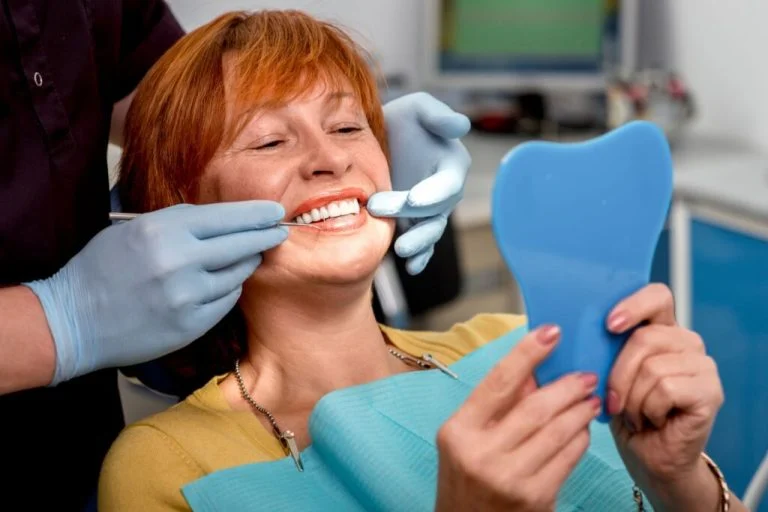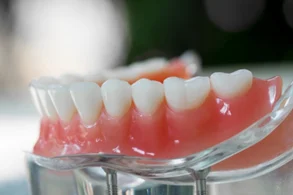
Loose dentures can turn everyday moments like eating and talking into a source of stress. If your dentures slip, click, or feel unstable, you’re not alone, and you do have options.
Implant dentures can be a more stable option for people with loose dentures because they anchor the restoration to the jawbone, helping reduce movement while eating and speaking.
Your dentures may have fit well at first, but your jawbone and gums can change over time after tooth loss, affecting how securely your dentures fit.
You deserve to eat, laugh, and speak without worrying about your teeth. This article walks you through why dentures loosen, the signs that it might be time for a change, and how implant-supported dentures could help you feel more like yourself again.
Key Takeaways
- Jawbone and gum changes over time are often the reason traditional dentures start to feel loose.
- Implant-supported dentures attach to your jawbone for a stronger, more secure fit than traditional dentures.
- Talking with your dentist about your candidacy, treatment steps, and costs can help you decide if implant dentures are right for your quality of life.
Why Dentures Lose Their Fit
Your dentures don’t stay the same size forever, and neither does your mouth. As your jawbone and gums change shape over time, even a well-made denture can start to feel loose.
Jawbone Changes After Tooth Loss
Your jawbone needs natural tooth roots to stay strong. When you lose teeth, that stimulation disappears, and your jawbone starts to shrink over time.
This process is called bone resorption. It happens slowly, but it adds up. Within just a year or two after losing teeth, you can lose a noticeable amount of jawbone density.
This bone loss changes the shape of your jaw. Your denture was made to match your mouth at one point in time, but your jaw doesn’t stay that same shape.
As your jawbone loss continues, it can even change your facial structure. You might notice your cheeks look a bit sunken or your lips seem thinner than before.
Wear, Gum Changes, and Denture Fit Problems
Your gums shift and change texture as you get older, and this affects how your denture sits. Soft tissue that once fit snugly against your denture may thin out or move slightly, creating gaps.
On top of that, your denture itself wears down with daily use. The chewing surfaces flatten over time, and this changes your bite.
Weight loss can also throw off your denture fit. If you lose weight in your face, the fit that once felt snug may suddenly feel loose.
These changes happen whether you wear full or partial dentures. Bone loss, weight changes, and daily wear and tear all play a role in making dentures less stable, and they often happen at the same time, making the problem worse.
Why Lower Dentures Often Feel Less Secure
If you wear conventional dentures, you’ve probably noticed your lower denture feels less stable than your upper one. This isn’t in your head. It’s a common complaint among denture wearers.
Your lower jaw has less surface area for a denture to grip onto compared to your upper jaw. Your tongue and cheek muscles also move around this denture constantly, which makes it harder to keep steady.
Your upper denture gets help from suction against your palate. Your lower jaw doesn’t have this same flat surface, so regular dentures on the bottom rely mostly on your gums and muscle control to stay put.
This is why lower dentures often need extra support to feel secure, especially as bone loss continues underneath them.
Signs It May Be Time to Consider Implants
If you rely on your dentures every day, you probably already know when something feels off.
Here are a few common signs that suggest it might be time to look into implant-supported dentures instead of sticking with your current setup.
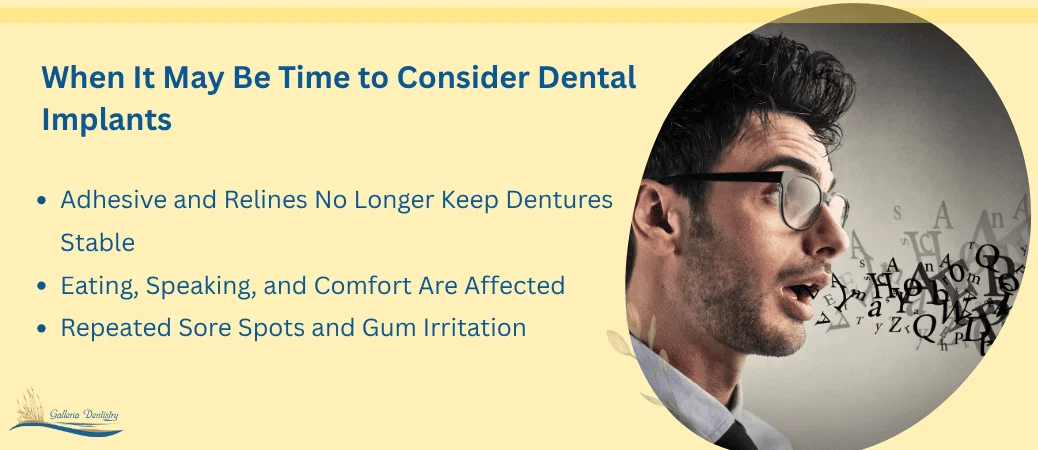
Adhesive and Relines No Longer Keep Dentures Stable
If you find yourself using more denture adhesive than you used to, that’s a clue. Over time, your gums and jawbone can change shape, which makes your dentures fit less snugly.
A denture reline can help for a while. But if you need relines more often than before, or adhesives just aren’t cutting it anymore, your dentures may no longer match the shape of your mouth.
This is a normal part of wearing dentures long-term. Still, it’s worth mentioning to your dentist. Loose dentures that keep slipping despite adhesives and relines are often a sign that implants could offer a more stable option.
Eating, Speaking, and Comfort Are Affected
Your dentures should let you eat, talk, and smile without thinking twice. If chewing ability has gotten harder, or certain foods are now off the table, that’s worth paying attention to.
You might also notice changes in how you speak. Slipping dentures can cause slurring or clicking sounds when you talk.
Here are a few everyday signs to watch for:
- Avoiding foods like apples, steak, or corn on the cob
- Feeling like your dentures shift when you laugh or yawn
- Speaking more slowly or carefully to avoid slippage
When these problems show up often, they can lower your quality of life. Implants are designed to support a more natural bite, which can make daily tasks feel easier again.
Repeated Sore Spots and Gum Irritation
Sore spots that keep coming back are not something to ignore. This kind of gum irritation often means your dentures are rubbing against areas they shouldn’t.
It could mean your denture base no longer fits your gum tissue the way it once did. Constant irritation can also make good denture care harder, since sore gums are more sensitive to cleaning and handling.
If you’re dealing with ongoing discomfort, don’t wait it out. Bring it up at your next dental check-up so your dentist can check your bone and gum health.
This is often one of the clearest signs that it’s time to talk about implant-supported options for better oral health.
How Implant Dentures Create a More Secure Foundation
Implant dentures work differently from traditional dentures because they anchor to your jawbone instead of just sitting on your gums. This gives you a stronger bite, less movement, and better support for your facial structure.
Titanium Implant Posts and Osseointegration
Dental implants use small titanium posts that your dentist places directly into your jawbone. Titanium is a special metal because your bone actually grows around it and bonds to it. This process is called osseointegration, and it’s what makes implants so stable.
Once osseointegration happens, the titanium implant posts act like new tooth roots. They give your denture a solid base to attach to.
This bond also helps with jawbone preservation, since the implant post stimulates your bone the same way a natural tooth root would.
Without this stimulation, your jawbone can shrink over time. That’s a common problem with traditional dentures.
Implant-retained dentures also provide stimulation to the surrounding jawbone, which may help reduce bone loss associated with missing teeth.
Removable Overdentures and Snap-In Options
If you like the idea of taking your denture out to clean it, removable options might be a good fit for you. These are often called overdentures, snap-on dentures, or snap-in dentures.
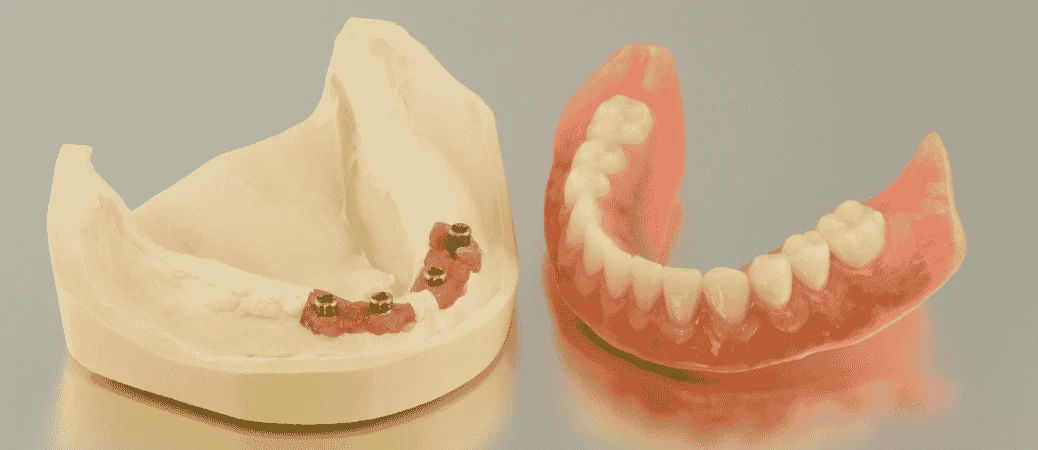
They connect to a small number of implants, usually two to four, depending on your needs.
The denture clips onto attachments on top of the implants. You’ll hear a “snap” when it locks into place, which means it’s secure and ready for eating or talking. At the end of the day, you simply unclip it for cleaning.
This option provides more stability than conventional removable dentures while still allowing you to remove the denture for cleaning.
Many people switch to an implant overdenture because it reduces slipping and cuts down on the need for messy adhesives.
Fixed Full-Arch Solutions
If you want a denture that stays in your mouth all the time, a fixed option may work better for you.
These are sometimes called hybrid dentures or a fixed bridge, and they attach permanently to implants in your jawbone. Your dentist removes them only for checkups or repairs.
Full-arch solutions often use methods like All-on-4 or All-on-6. These names refer to the number of implants used to support an entire arch of teeth.
All-on-4 uses four implants, while All-on-6 uses six, which can offer added support depending on your bone health and goals.
Fixed full-mouth restoration options feel and function closer to natural teeth. You brush fixed implant restorations daily and use additional cleaning techniques around and beneath the restoration as recommended by your dentist.
For many people, this becomes the most comfortable and confident way to replace a full arch of missing teeth.
Comparing Denture Solutions and Daily Benefits
Fixing loose dentures usually comes down to three paths: patch them up with adhesive, reline them, or switch to implants. Each option affects your chewing ability, comfort, and daily routine in a different way.

Traditional Dentures, Relines, and Adhesives
Traditional dentures rest right on your gums, and over time, your jawbone changes shape. This makes even a well-fitted set of conventional dentures feel loose.
Denture adhesive is the quickest fix. It’s cheap and easy to find, but you’ll need to reapply it daily, and it can feel messy.
A denture reline is a longer-lasting solution. Your dentist adds new material to the base of your full dentures or partial dentures so they hug your gums again. This usually costs less than starting over with a new set.
Here’s a quick breakdown:
- Adhesive: cheapest, daily use, temporary fix
- Reline: moderate cost, lasts months to years
- New dentures: highest upfront cost among removable dentures, best fit
None of these options stop the bone loss that caused the looseness in the first place.
Implant-Supported Dentures Versus Conventional Dentures
Implant dentures work differently than traditional sets. Small posts get placed in your jawbone, and your denture snaps onto them. This gives you a much stronger hold than adhesive or a reline can offer.
You’ll notice the biggest difference when you eat. Implant-supported dentures restore chewing ability closer to a natural bite, so foods like apples, nuts, and steak become easier to enjoy again.
Conventional dentures can shift or slip during meals, which limits what you feel comfortable eating.
Implant-retained dentures also help protect your jawbone. Since the posts stimulate the bone the same way natural tooth roots do, you’re less likely to see the bone loss that comes with regular denture wear.
The tradeoff is cost and time. You’ll pay more upfront, and the placement process takes a few months to complete, since your bone needs time to heal around the implants before your final denture is attached.
Choosing Between Removable and Fixed Teeth
Your choice here depends on how much stability and convenience matter to you.
Removable dentures, whether adhesive-based or implant-supported, can be taken out at night for cleaning. This makes oral hygiene simple, since you can brush both the denture and your gums separately.
Fixed options, like implant-retained dentures that only your dentist can remove, feel more like natural teeth.
You won’t worry about slipping while talking or eating, but cleaning requires more care since you’re brushing and flossing around a fixed appliance daily.
Think about your goals for tooth replacement:
- Looking for a removable option? Traditional dentures, adjustments, or relines may be appropriate depending on the condition and fit of your current denture.
- Want better stability and chewing support? Implant-supported dentures may be worth considering.
- Want to skip daily removal? Fixed implant dentures fit your lifestyle best.
Healthy gums and consistent oral hygiene matter no matter which path you choose. Your decision ultimately affects your comfort, confidence, and quality of life every single day.
Candidacy, Treatment Steps, and Costs
Your journey to implant-supported dentures starts with a checkup and ends with a smile that stays put. Along the way, you’ll deal with bone health, healing time, and figuring out how to pay for it all.
Dental Exam, 3D Imaging, and Treatment Planning
Your first step is a dental exam to evaluate your gums, remaining teeth, and jaw structure. At Galleria Dentistry, Dr. Gery Benza can assess these factors and determine whether implant dentures may be appropriate for your needs.
Most offices use 3D imaging to get a full picture of your jawbone. This scan shows bone density and helps your dentist plan exactly where implants should go.
Treatment planning comes next. Your dentist maps out how many implants you need, where they’ll sit, and what type of denture will attach to them.
This step matters a lot. A solid plan lowers your risk of problems later and helps you know what to expect before surgery even starts.
Bone Grafting When Jawbone Density Is Limited
Not everyone has enough bone to support implants right away. If you’ve worn dentures for years, your jawbone may have shrunk from lack of use.
When bone density is too low, your oral surgeon may suggest a bone graft. This adds material to build up the area so implants have something strong to attach to.
Healing from a bone graft can take a few months. It’s an extra step, but it gives your implants a better shot at lasting for years.
Your dentist will let you know early on if this applies to you, so you can plan your timeline and budget around it.
Implant Surgery, Healing, and Final Restoration
Implant surgery involves placing small titanium posts into your jawbone.
After surgery, you’ll need healing time. This can take a few months, since your bone needs to fuse tightly around the implants.
Once healing is done, your dentist attaches your final denture to the implants. At this point, you should notice a big difference in how secure your teeth feel compared to traditional dentures that sit loosely on your gums.
Understanding Costs and Financing Options

The cost of implant dentures depends on factors such as the number of implants needed, the type of restoration, and whether additional procedures are required.
Galleria Dentistry accepts insurance plans that allow patients to choose their dental provider and can file claims on their behalf, although the practice is not in network with dental insurance providers.
Financing options are also available for eligible patients.
Patients can review their available insurance benefits and financing options with the Galleria Dentistry team before beginning treatment.
Frequently Asked Questions
Loose dentures raise a lot of questions, especially when you’re trying to figure out the difference between a quick fix and a long-term solution. Here are answers to the questions people ask most.
Why do my dentures feel loose, and what can I do about it?
Your dentures most likely feel loose because your jawbone has changed shape. When you lose teeth, your jawbone shrinks over time since it no longer gets the stimulation it needs from tooth roots.
This process is called bone resorption, and it happens to almost everyone who wears dentures. Your gums can also change shape due to weight changes, age, or health conditions.
You have a few options depending on how loose your dentures have become. A reline or rebase can often fix the problem, and if your dentures are old or badly worn, a new set may work better.
Can loose dentures be tightened or adjusted by a dentist?
Yes, your dentist can often tighten your dentures without replacing them completely. A denture reline adds a new layer of material to the inside of your denture so it matches your current gum shape.
You can get a hard reline for a firm, long-lasting fit, or a soft reline if your gums are sensitive.
If the base of your denture is cracked or worn out, your dentist might suggest a rebase instead, which replaces the base while keeping your existing denture teeth.
Are denture adhesives a good solution for dentures that keep slipping?
Denture adhesive can help for a little while, but it’s not meant to be a long-term fix. If you find yourself using more and more adhesive just to get through the day, that’s a sign your dentures no longer fit the way they should.
Wearing a denture that doesn’t fit well can irritate your gums, even with adhesive. Over time, this can make the bone resorption process worse instead of solving the real problem.
When should I consider implant-supported dentures instead of traditional dentures?
You should think about implant-supported dentures if relining hasn’t solved your looseness problem or if you’ve lost a significant amount of jawbone.
Implant-retained overdentures snap onto two to four implants placed in your jaw, giving your denture a stable base to click into.
You might also consider this option if you’re tired of dealing with sore spots, slipping, or trouble chewing certain foods. Many people switch to implants when they want to eat and speak with more confidence than a traditional denture allows.
There are two main types to know about. Implant-retained overdentures are still removable for cleaning, while fixed implant dentures stay in your mouth permanently and function more like natural teeth.
What are the disadvantages of implant dentures?
Implant dentures cost more upfront than traditional dentures, and prices can run into the thousands of dollars depending on how many implants you need.
You’ll also need surgery to place the implants, which means healing time and a small risk of complications like infection.
Not everyone qualifies for implants right away. If you’ve lost too much bone, you may need a bone graft before your implants can be placed, which adds time and cost to your treatment.
Your implants will also need regular maintenance to stay in good condition. Some parts of the denture attachment system may wear down over the years and need replacing.
Is it too late to get implant dentures if I am over 70?
No, your age alone doesn’t rule you out for implant dentures. What matters more is your overall health, the condition of your jawbone, and whether you have any medical conditions that could affect healing.
Many people in their 70s, 80s, and beyond get implant dentures successfully. Your dentist will check your bone density and health history through an exam and imaging to see if you’re a good candidate, regardless of your birthday.