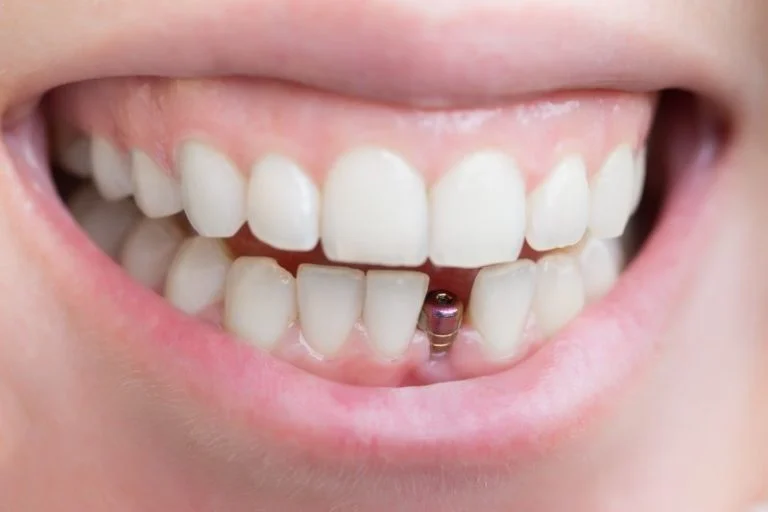
Maybe you had a tooth pulled five years ago. Maybe it has been twenty. Either way, you might wonder if that window has closed for good.
Here’s some good news. Dental implants after years of missing teeth are still possible for many patients, as long as the jawbone and gums can provide enough support.
When bone has been lost, treatments such as bone grafting may help rebuild that foundation.
That said, time does change things in your mouth. Your jaw shrinks a bit when a tooth root is gone, and nearby teeth can drift into the empty space.
Understanding what has happened, and what your dentist can do about it, makes the whole tooth replacement process a lot less mysterious.
Key Takeaways
- A long gap since your tooth loss does not automatically rule out implants.
- Bone grafting and other prep work can rebuild enough jaw support for a stable implant.
- Your dentist checks bone, gums, and overall health before comparing implants to bridges or dentures.
The Short Answer: Time Alone Is Not a Disqualifier
Waiting five, ten, or even twenty years after losing a tooth does not automatically close the door on implant therapy.
What matters far more is the amount of bone you still have, the health of your gums, and your overall medical history.
Why Delayed Implant Placement Can Still Be Successful
Delayed implant placement simply means the implant goes in months or years after the tooth is gone, instead of right away.
Your jawbone does shrink after an extraction, mostly during the first year. But shrinking is not the same as disappearing. Many people still have enough bone height and width for a standard dental implant.
If you don’t, grafting can rebuild the area. Options include:
- Bone grafts to add width or height to a thin ridge
- Sinus lifts to build bone in the upper back jaw
- Zygomatic implants, which anchor into the cheekbone when the upper jaw is severely resorbed
Even people who have worn dentures for decades sometimes qualify. A 3D CT scan is usually the only way to know for sure.
How Immediate Implant Placement Differs From a Delayed Approach
Immediate implant placement happens the same day the tooth comes out. The socket is still open, so the implant slides into a ready-made space.
Delayed placement waits for the site to heal and often needs a graft first. Here’s how the two compare:
| Immediate | Delayed | |
| Timing | Day of extraction | Months to years later |
| Bone preservation | Helps limit shrinkage | Some bone loss already happened |
| Grafting needed | Sometimes minor | More likely |
| Number of surgeries | Usually fewer | Often two or more |
| Total treatment time | Shorter | Longer |
Immediate placement is convenient, but it isn’t always possible. Infection, poor bone quality, or a fractured socket can rule it out.
Delayed placement takes longer, though success rates remain high when the site is properly prepared.
When an Implant Specialist May Recommend Another Solution
An implant specialist will sometimes suggest a different path. That usually happens when:
- Active gum disease hasn’t been treated yet
- Diabetes is uncontrolled or you’re going through cancer treatment
- Smoking is heavy, which slows healing and raises failure risk
- Bone loss is extensive and grafting isn’t a good fit for your health
In these situations, a bridge or a denture may be the better alternative for now.
Many of these roadblocks are temporary. Treat the gum disease, get your blood sugar steady, cut back on smoking, and implants may become an option again.
Ask your specialist what would need to change for you to qualify. That question often gets you a clearer answer than a simple yes or no.
What Years of Tooth Loss Can Do to Your Mouth
When a tooth is gone, your jawbone starts to shrink, nearby teeth begin to drift, and your bite slowly changes.
These shifts happen quietly over months and years, but they affect how you chew, how your face looks, and what treatment options you have later.
Bone Resorption and Changes in Jawbone Density
Your jawbone stays strong because tooth roots push against it every time you chew. Take the root away, and the bone in that spot stops getting that signal.
The body then breaks the bone down and moves those minerals elsewhere. This process is called bone resorption, and it starts fast.
Research on dental implants and bone loss shows about 25% of bone loss happens within the first three months after you lose a tooth.
Most of the shrinkage happens in the first few years after losing a tooth, then slows down. Bone density and height keep dropping over time, which is why an implant placed years later often needs a bone graft first.
Shifting Teeth, Bite Alignment, and Facial Support
Teeth need neighbors to stay put. When there’s a gap, the teeth on either side slowly tip into the open space, and the tooth above or below can grow down or up toward it.
That drifting changes your bite alignment. Here’s what often follows:
- Uneven wear on the teeth that now take extra pressure
- Jaw joint soreness or clicking from a bite that no longer meets evenly
- New spaces between teeth that trap food and plaque
- Harder cleaning, since tilted teeth are tough to floss well
Bone loss also affects how you look. As the ridge under your lip and cheek gets thinner, that area loses support, which can make the lower face appear shorter or more sunken.
Why Replacing a Missing Tooth Still Matters
Even one gap changes how you eat. Many people start chewing on the other side, which puts more strain on those teeth over time.
An implant works differently from a bridge or partial denture because the post sits in the bone. That gives the jaw something to work against again, which helps improve jaw stability and chewing while it holds the crown in place.
Acting sooner usually means simpler treatment. Waiting doesn’t close the door, though; implants remain a great option even years after tooth loss, and a dentist can check your remaining bone with a 3D scan to see what you’ll need.
How Dentists Determine Whether You Are a Candidate
Getting approved for implants comes down to the condition of your jawbone and gums, your general health and healing ability, and detailed imaging.
At Galleria Dentistry, Dr. Gery Benza can evaluate these factors and determine whether implant treatment or additional preparation may be appropriate.
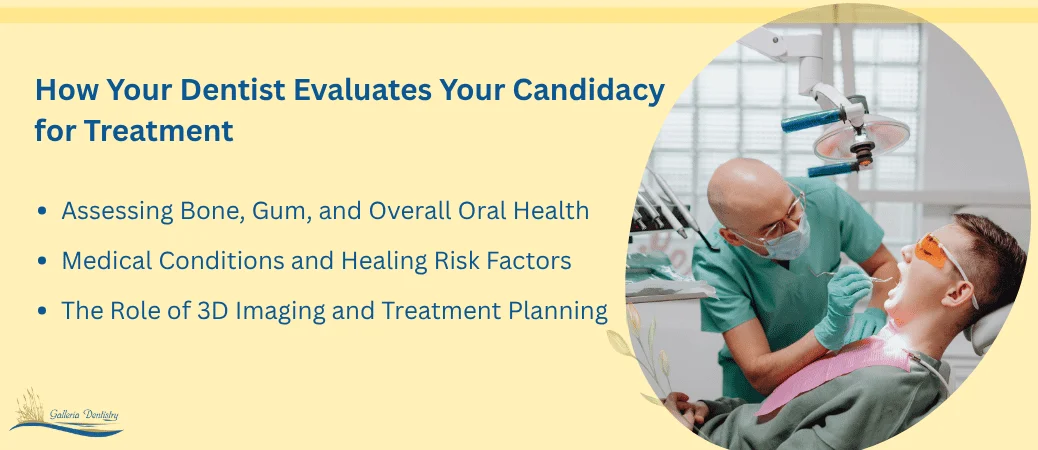
Assessing Bone, Gum, and Overall Oral Health
Your first visit usually starts with a full mouth exam. Your dentist checks your remaining teeth, existing dental work, and the tissue where your tooth used to be.
Bone comes first. Standard implants generally need adequate bone width and height for stable placement. Your jaw can lose a significant amount of width after a tooth is lost.
Your gums matter just as much. Your dentist looks for pink, firm tissue, pocket depths, and no bleeding when probed.
Active gum disease has to be treated first. Depending on your condition, periodontal therapy may help improve gum health before implant treatment.
Daily oral hygiene counts too. Brushing twice a day and flossing regularly shows your dentist you can maintain implants long term.
Medical Conditions and Healing Risk Factors
Implants depend on your body’s ability to heal bone around a titanium post, so your medical history gets a close look.
Conditions your dentist will ask about include:
- Uncontrolled diabetes: high blood sugar slows bone healing and raises infection risk, so your levels usually need to be well managed first
- Osteoporosis: affects bone quality and sometimes involves medications that change how bone heals
- Autoimmune disorders: can alter your immune response and healing speed
None of these automatically rule you out. They often just mean extra planning or a conversation between your dentist and your physician.
Smoking is the habit that matters most. Smokers see a 15.8% implant failure rate compared to 7.3% in non-smokers, so most dentists ask you to stop at least two weeks before surgery and stay off tobacco while you heal.
Teeth grinding is another factor. It won’t disqualify you, but you’ll likely need a night guard to protect the crown.
The Role of 3D Imaging and Treatment Planning
Regular X-rays give a flat view. For implants, your dentist needs depth, which is why cone beam CT scans are standard.
These scans build a three-dimensional picture of your jaw, accurate to about 0.1mm. They show exactly how much bone you have left after years without a tooth.
The scan also reveals what your dentist needs to avoid:
| What the scan shows | Why it matters |
| Nerve locations | Prevents nerve damage during surgery |
| Sinus cavity position | Determines if you need a sinus lift |
| Bone density and volume | Decides if grafting comes first |
| Exact angles and depths | Guides precise implant placement |
From there, your treatment plan gets written out. It lists any prep work you need, healing time between steps, how many implants you’ll get, and the timeline for dental implant surgery through your final crown.
This is also a good time to review financing options and the expected costs associated with each stage of treatment.
Preparing the Jaw for a Stable Implant
When a tooth is gone for years, the bone that used to hold it slowly shrinks. Your dentist may need to rebuild that area with a bone graft, or lift the sinus above your upper back teeth, before implant surgery can happen.
When Bone Grafting May Be Needed
Your dentist checks jawbone health with a 3D scan, usually a cone beam CT. This shows how much bone height and width you have left.
An implant needs enough bone on all sides to stay steady. If the ridge is too thin or too short, the implant could loosen or fail.
Grafting is common if you:
- Lost the tooth more than a year ago
- Had gum disease around the missing tooth
- Wore a removable denture for a long time
- Had an infection or injury when the tooth came out
Good news: dental implants are still possible with bone loss in many cases. Sometimes a narrow ridge can be widened with ridge expansion instead of a full graft.
Bone Graft Materials and Healing Time
Grafts come from a few different places, and your dentist picks the one that fits your case.
| Type | Where it comes from |
| Autograft | Your own bone, often the back of the jaw |
| Allograft | Donated human bone from a tissue bank |
| Xenograft | Processed animal bone, usually bovine |
| Synthetic bone | Lab-made materials like calcium phosphate |
The graft acts like a scaffold. Your own bone cells grow into it over time and replace it.
Swelling and soreness usually fade in a week or two. The bone itself is slower, and a bone graft needs at least three months to heal, with larger grafts taking nine to 12 months.
Don’t wait too long after healing. Getting the implant within six to 12 months helps, since an unused graft starts to shrink.
When a Sinus Lift Is Considered for Upper Back Teeth
Your sinus cavities sit right above your upper molars and premolars. When those teeth are missing for years, the sinus floor can drop lower into the space where bone used to be.
That leaves too little bone for an implant to grip. A sinus lift raises the sinus membrane and adds graft material underneath.
Sinus lift surgery is often done through a small opening in the side of the jaw. In smaller cases, your dentist can lift the sinus through the implant site itself.
Healing usually takes several months before implant placement. Some jaw preparation procedures can be combined with the implant in the same visit when there’s already decent bone to start with.
From Implant Surgery to a Restored Smile
Getting a dental implant happens in stages, not all in one visit. Your dentist places a small titanium post in your jaw, waits for it to bond with the bone, and then attaches the piece that holds your new tooth.
Placing the Implant Post
Dental implant surgery is usually done with local anesthesia, so you stay awake but don’t feel pain. Some people also choose sedation if they feel nervous.
Your dentist opens a small area of gum tissue, makes room in the bone, and places the implant post. Most single-tooth dental implant placement takes about 1 to 2 hours per implant.
If you had a bone graft first, the graft needs several months to heal before this step. That’s common when teeth have been missing for a long time and the jawbone has shrunk.
Depending on your treatment plan, your dentist may provide a temporary tooth while the implant site heals.
Osseointegration and the Healing Phase
Osseointegration is the process where bone cells grow around the titanium post and lock it in place. This is what gives an implant the strength of a natural tooth root.
It usually takes 3 to 6 months. Your bone density and general health can make it faster or slower.
A few things help this stage go smoothly:
- Eat soft foods for the first couple of weeks
- Rinse with warm salt water instead of scrubbing the surgical site
- Skip smoking, since it raises the risk of implant failure
- Take any prescribed antibiotics exactly as directed
- Use ice packs in the first days to limit swelling
Soreness usually fades within a few days. Your dentist will check the site to confirm the post is stable before moving on.
Adding the Abutment and Final Tooth Restoration

Once the post is fused, your dentist attaches the abutment. This is a small connector that sits above the gum line and holds your crown.
Placing it is quick and often done in one short visit. The gum tissue around it needs a week or two to settle.
Then your dentist takes an impression or digital scan of your bite. A dental lab uses it to build a crown that matches the shade and shape of your other teeth.
The crown is screwed or cemented onto the abutment, and that’s the step that restores your smile and your ability to chew normally.
From here, care is simple: brush twice a day, clean around the implant, and keep your regular checkups.
Comparing Long-Term Tooth Replacement Options
If you’ve had gaps in your smile for years, you have more than one way to fill them. Implants, bridges, and dentures each work differently, cost different amounts, and last for different lengths of time

Single Implants, Implant-Supported Bridges, and Multiple Missing Teeth
A single implant replaces one tooth. It’s a titanium post placed in your jawbone, topped with a crown. Nothing is done to the teeth next to it.
If you’re missing three or four teeth in a row, you usually don’t need an implant for each one. An implant-supported bridge uses two implants to hold a bridge of several crowns.
For a full arch, dentists often use four to six implants to support a fixed set of teeth or a snap-in denture. That’s far fewer implants than teeth.
Your dentist decides how many posts you need based on bone volume, bite force, and where the gaps sit in your mouth.
How Implants Compare With Dental Bridges and Dentures
Here’s a quick look at how the three main tooth replacement options stack up:
| Option | Typical cost per tooth | How long it lasts | Surgery needed? |
| Dentures | $300–$3,000 | 5–10 years | No |
| Dental bridges | $1,500–$5,000 | 5–15 years | No |
| Dental implants | $5,000–$6,000+ | Potentially a lifetime | Yes |
A traditional bridge means grinding down the healthy teeth on either side of the gap. That’s permanent.
Removable dentures and a partial denture cost the least upfront, but they can shift while you eat or talk and need relining as your jaw changes shape.
Unlike traditional bridges and removable dentures, dental implants are anchored in the jawbone and provide stimulation to the surrounding bone during function.
That matters a lot when you’ve already lost bone from years without a tooth.
Choosing a Solution That Fits Your Health, Goals, and Budget
Start with your bone. If a scan shows too little bone for an implant, you may need a bone graft and additional healing time, or your dentist may recommend a bridge or partial denture instead.
Some health conditions matter too. Uncontrolled diabetes, heavy smoking, and certain medications can slow healing and raise the risk of implant failure.
Then think about time and money. Implants may cost less over the long run because bridges and dentures usually need replacing every decade or so.
But if you need to replace missing teeth quickly or on a tight budget, a partial denture now doesn’t rule out implants later.
Bring your questions to a consultation. Ask what your bone looks like, how many appointments you’d need, and what the total cost includes.
Frequently Asked Questions
Waiting years to replace a missing tooth doesn’t automatically rule you out, though bone loss and shifting teeth can change your treatment plan.
Below are answers to the questions people ask most often about getting implants long after tooth loss.
Is it too late to get a dental implant years after a tooth was removed?
In most cases, no. Many adults get dental implants years after tooth loss, even when the gap has been there for a decade or more.
Your dentist will look at three things: how much jawbone is left, how healthy your gums are, and whether nearby teeth have drifted into the space. If those check out, you can usually move forward.
Time matters, but it isn’t a hard cutoff. It just changes how much prep work you might need first.
Can I get dental implants 10 or 20 years after an extraction?
Yes. Many patients can still qualify for dental implants years after an extraction. Modern implant dentistry can restore teeth after extended periods of tooth loss for most patients.
The catch is that a 20-year-old gap usually needs more groundwork than a 2-year-old one. You may need a bone graft, a sinus lift, or orthodontic work to reopen space that neighboring teeth have closed in.
That said, waiting even longer only allows more bone loss to occur. If you’re thinking about it, an evaluation now gives you more choices than one a few years from now.
What happens to the jawbone when teeth have been missing for a long time?
Your jawbone needs pressure from chewing to stay strong. When a tooth root is gone, that stimulation disappears and the bone starts to shrink.
This happens faster than most people expect.
Over the years, you may notice:
- The gum ridge looks flat or sunken
- Nearby teeth tilt toward the gap
- The opposing tooth drifts down or up into the space
- Your bite feels different when you chew
- A denture that used to fit now slips
Can I still get implants if I have significant bone loss?
Often, yes. Bone loss is a common finding, not an automatic no.
Your dentist will take a 3D scan to measure exactly how much bone height and width you have. If there isn’t enough to hold an implant securely, bone grafting can rebuild that support in many cases.
There are also implant designs made for tighter spaces. Narrow-diameter implants and short implants work in some areas where standard sizes won’t fit. In the upper back jaw, a sinus lift can create room where the sinus has expanded downward.
If your case is complicated, a prosthodontist or oral surgeon is worth seeing. They handle complex cases involving significant bone loss and full-arch reconstruction regularly.
Will I need a bone graft before getting dental implants?
Maybe. It depends entirely on what your scan shows.
Some people who have been missing teeth for years still have plenty of bone, especially in the lower front jaw. Others need grafting after just a few years, particularly in the upper back where bone is naturally thinner.
Grafting comes in a few forms. A small socket graft adds material to one spot. A ridge augmentation rebuilds a wider area. A sinus lift raises the sinus floor to make a vertical room.
Healing time varies. Minor grafts may only need a few months before implant placement, while larger reconstructions can take six months or longer.
In some cases, your surgeon can place the graft and the implant during the same visit.
How much do dental implants cost when bone grafting is needed?
A single implant with the post, abutment, and crown typically runs $3,000 to $6,000. Grafting adds to that total.
Costs shift based on where you live, how complex your case is, and which specialist you see. Fees in large cities tend to run higher.
Dental insurance benefits for implant treatment vary by plan. Galleria Dentistry accepts insurance plans that allow patients to choose their dental provider and can file claims on their behalf, although the practice is not in network with dental insurance providers. Financing options are also available for eligible patients.